





Managed vs Unmanaged Switches: What’s the Difference?

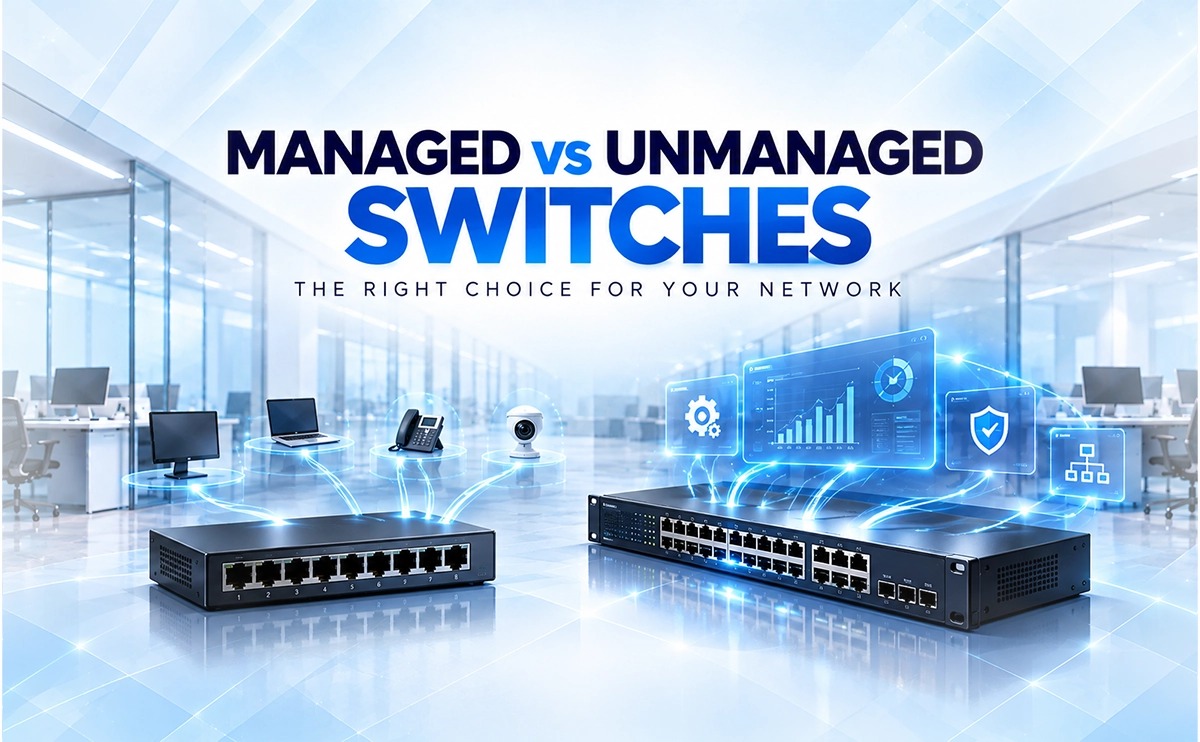
Switches play an important role in connecting devices within a network, but not all switches offer the same level of control. Managed and unmanaged switches can both connect devices and transfer data across a network, but they are designed for different network requirements.
Unmanaged switches are designed for simple network setups where basic connectivity is the main requirement. They are generally easy to install and use without requiring configuration, making them suitable for small offices, basic networks, and environments where advanced network management is not needed. Once connected, the switch can start handling network traffic without requiring additional setup.
Managed switches provide more control over how the network operates. They allow network administrators to configure and monitor different aspects of the network, including VLANs, traffic management, security settings, and port configurations. This makes them more suitable for businesses with larger or more complex networks that require greater control and visibility.
The right choice depends on the size and requirements of your network. A small office with a limited number of devices may only need the simple connectivity of an unmanaged switch, while a growing business or larger network may benefit from the additional management and configuration options of a managed switch. Choosing the right type of switch helps ensure that your network has the level of control and flexibility it needs today and as it grows.